For a long time, oil has been treated as something to fight. Blot it away. Strip it out. Control it.
Especially if your skin already feels shiny or prone to breakouts, the idea of adding oil can feel counterintuitive, even reckless. But this logic is built on a misunderstanding of how skin actually works.
In reality, oils have always been part of healthy skin. Not as an excess, but as a structure. And when chosen and used correctly, they can be one of the most effective ways to bring skin back into balance — even oily skin.
Oil is not the enemy. Imbalance is.
The outermost layer of the skin, the stratum corneum, is often described using the “brick and mortar” model. Skin cells are the bricks, and lipids — fats — are the mortar that holds everything together.
These lipids are essential. They help the skin retain moisture, protect against environmental stressors and regulate how reactive the skin becomes. When this lipid barrier is compromised, water escapes more easily, a process known as transepidermal water loss (TEWL).
Here’s where things get interesting.
When the skin loses too much moisture, it often responds by producing more sebum in an attempt to protect itself. This means that skin can feel oily not because it has too much oil, but because it is dehydrated or stripped.
In other words, oiliness is often a symptom of imbalance, not excess.
What science tells us about oils and the skin barrier
Modern skin science shows that replenishing the skin with the right lipids helps restore barrier function and reduce TEWL. Plant oils rich in essential fatty acids play a particularly important role here, as they support the structure of the barrier rather than simply coating the surface.
One example is Pistacia Vera (Pistachio) Seed Oil, which is naturally rich in fatty acids that help improve skin elasticity and reinforce the lipid matrix. These fatty acids integrate into the barrier, supporting flexibility and resilience without feeling heavy.
Another key oil is Punica Granatum (Pomegranate) Seed Oil, known for its high content of punicic acid, a rare omega-5 fatty acid. Research suggests punicic acid supports barrier repair and helps the skin recover from inflammation and environmental stress. This makes it particularly relevant for skin that feels reactive, imbalanced or overstimulated.
Together, these oils don’t tell the skin to “produce less oil”. Instead, they help restore the conditions that make overproduction unnecessary.
Oils don’t hydrate — they help you keep hydration
One common misconception is that oils replace moisturisers. They don’t.
Oils do not provide water to the skin. What they do is reduce water loss by reinforcing the lipid barrier. This is why oils are most effective when applied after a water-based step, such as a lotion or essence.
Think of hydration as filling a reservoir, and oil as sealing the lid.
Without lipids, water escapes quickly. With the right oils in place, hydration stays where it belongs, and the skin remains supple, elastic and calm.
Why oily skin often benefits the most
Oily skin is frequently treated aggressively. Strong cleansers, frequent exfoliation and oil-free routines are often used in an attempt to control shine. Unfortunately, this approach can further damage the barrier and increase oil production over time.
When the skin finally receives adequate barrier support, including lipids, it often responds by calming down.
Sebum production becomes more regulated. The surface feels more balanced. The skin becomes less reactive.
This is why many dermatologists and skin therapists now encourage people with oily or combination skin to rethink their relationship with oils, not as a shortcut to glow, but as a long-term strategy for skin health.
The role of oils in a modern skincare routine
In well-designed routines, oils are not used to suffocate the skin or replace essential steps. They are used to complete the routine.
Cleansing removes what doesn’t belong.
Hydration replenishes water.
Oils protect what you’ve built.
This layered approach respects the skin’s natural architecture and supports its ability to function on its own.
The Barrier Elixir: Jevie’s approach to oils
At Jevie, oils are not treated as decorative or optional. They are formulated as functional components of skin health.
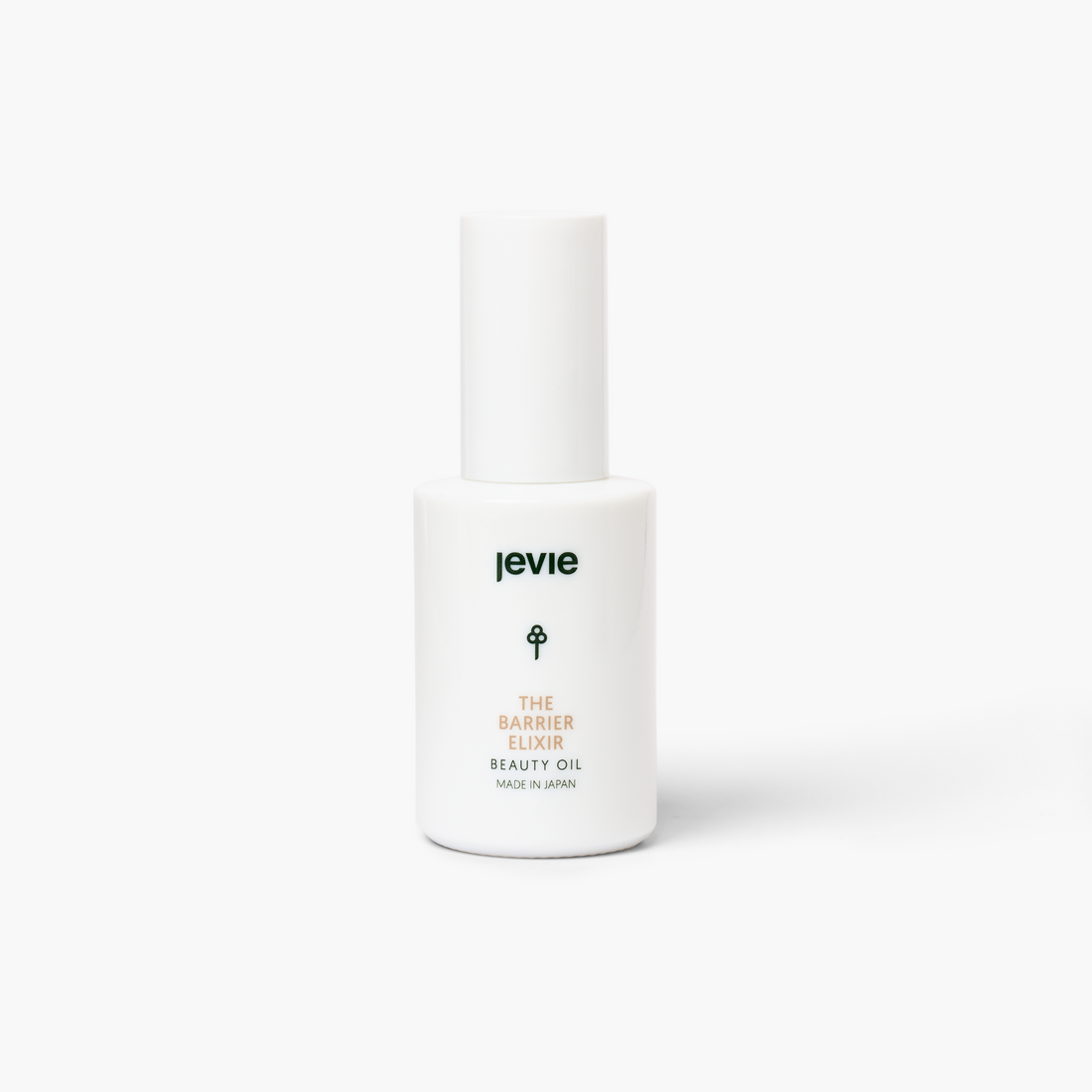
The Barrier Elixir is designed to support the skin’s natural lipid barrier rather than overwhelm it. Its composition is carefully chosen to work in harmony with the skin, helping to reduce water loss, protect against environmental stress and maintain elasticity over time.
Used as the final step in your routine, it seals in hydration from The Serum while reinforcing the barrier that keeps skin stable and resilient. The texture is lightweight and fast-absorbing, making it suitable even for skin that tends to feel oily or unbalanced.
Rather than telling the skin what to do, it gives the skin what it needs.
Rethinking oil as care, not excess
Oils do not belong to one skin type. They belong to healthy skin.
When we stop treating oil as something to eliminate and start seeing it as a structural component of the skin, routines become gentler, simpler and more effective.
Balanced skin is not dry or greasy. It is flexible. Comfortable. Able to adapt.
And often, the missing piece is not another active ingredient, but the quiet support of lipids done right.
That is why oils belong in skincare — even if you have oily skin.
If you’d like to read more
The role of lipids and oils in skin health is well established in dermatological research. Below are selected scientific sources that explore skin barrier function, plant oil effects, and the structure of the stratum corneum.
Selected references and further reading:
-
Stratum Corneum Defensive Functions: An Integrated View — Journal of Investigative Dermatology (Elias, 2005) — A foundational review of how the skin’s outer layer protects and maintains barrier homeostasis at the structural level.
-
Anti-Inflammatory and Skin Barrier Repair Effects of Topical Application of Some Plant Oils — International Journal of Molecular Sciences (Lin, Zhong & Santiago, 2018) — A review of how plant oils can support skin barrier repair, reduce inflammation, and deliver antioxidant protection when applied topically.